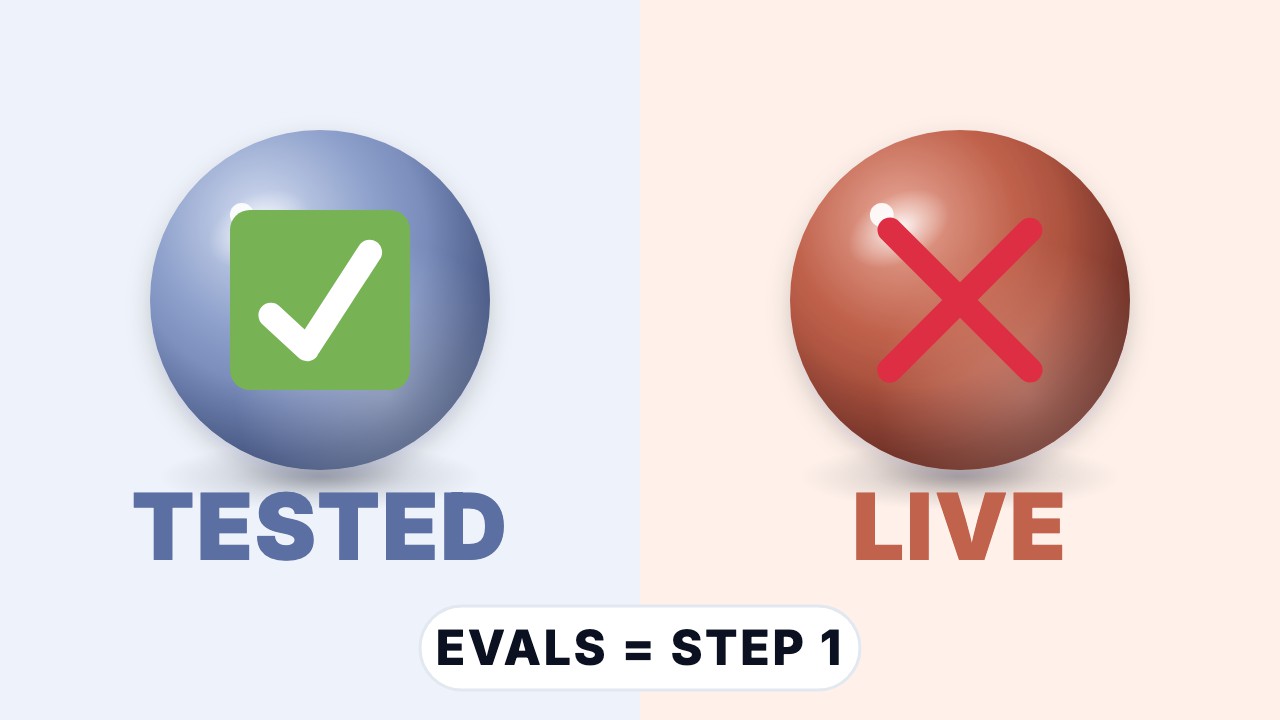
Voice Agent Observability vs Testing: What Is the Difference?
The main difference is when the evaluation happens and which conversations it examines.
| Dimension | Voice Agent Testing | Voice Agent Observability |
|---|
| Primary purpose | Validate expected behavior | Monitor actual production behavior |
| When it runs | Before launch and after changes | During production |
| Call participants | Simulated callers or controlled participants | Real borrowers and other real callers |
| Scenario coverage | Defined test scenarios | Conversations that occur in production |
| Failure detection | Known failure modes and regressions | Known and newly observed failures, subject to monitoring coverage |
| Evaluation output | Scenario pass/fail results and test reports | Call scores, alerts, trends, traces, and QA evidence |
| Business outcomes | Simulated or controlled outcomes | Real call outcomes connected to downstream systems |
| Change detection | Regression testing after changes | Trend and drift analysis across versions |
| Regulatory oversight | Evidence of pre-deployment controls | Evidence supporting ongoing oversight |
| Continuous improvement | Tests updated by engineering teams | Production failures inform future tests |
Testing answers:
"Does the agent work under the conditions we designed?"
Observability answers:
"Is the agent continuing to work as intended under real operating conditions?"
An NBFC needs both.
Why Is Testing Alone Not Enough for NBFC Collections Agents?
An AI voice agent deployed today may not behave the same way three months later.
Four major factors can change its behavior.
1. Changes to the Language Model
An agent may depend on an external large language model.
Changes in model versions, inference configurations, or provider behavior can affect how the agent follows instructions, responds to unexpected questions, and handles edge cases.
A 2023 study examining changes in GPT-3.5 and GPT-4 behavior across different periods demonstrated that model performance can vary over time.
The exact findings were task-specific, but the operational lesson is relevant: teams should not assume that a model-backed service will always behave exactly as it did during an earlier evaluation.
A passed test reflects a particular configuration at a point in time, not a permanent guarantee.
2. Changes to the Prompt
NBFC collections teams may update prompts to improve repayment commitments, reduce average handle time, or improve conversation flow.
A prompt change designed to increase promise-to-pay rates could unintentionally weaken another instruction.
For example, encouraging the agent to secure a repayment date may conflict with the requirement to recognize financial hardship and offer appropriate support.
Pre-release regression testing helps identify such problems.
Production observability helps determine whether the changed behavior is appearing during real calls.
3. Changes to the Voice AI Stack
An AI voice agent typically depends on multiple components.
These may include:
- Speech-to-text recognition.
- Language model inference.
- Text-to-speech generation.
- Telephony infrastructure.
- Loan management system integration.
- CRM and payment system connections.
- Call transfer and escalation services.
A change in any component can affect the conversation.
For example, a speech recognition update might incorrectly transcribe repayment amounts spoken in a regional language.
A telephony configuration change might introduce additional silence.
An account API failure might leave the agent without an authorized balance.
Testing should cover these changes, while observability should track their impact in production.
4. Changes to Borrowers, Portfolios, and Rules
An NBFC may expand collections operations from one borrower segment to another.
An agent trained and tested primarily on early-stage delinquency conversations may encounter different circumstances when deployed to later DPD buckets.
The new portfolio might involve more disputed debts, hardship disclosures, complex repayment arrangements, or requests for human assistance.
Language preferences and regulatory requirements may also vary by market.
A successful test on one portfolio does not establish that the same agent will perform equally well everywhere.
A pre-launch evaluation is a snapshot. Production observability establishes whether the agent continues to meet expectations as operating conditions change.
NBFCs are responsible for recovery-agent conduct, borrower confidentiality, and appropriate collection practices.
Applicable RBI directions restrict practices including intimidation, harassment, privacy intrusion, persistent calling, and false or misleading representations.
For the applicable non-microfinance recovery-call framework, restrictions include calls before 8:00 a.m. and after 7:00 p.m.
AI voice agents do not eliminate the NBFC's responsibility to maintain suitable oversight of collections activity.
This makes it important to evaluate what happens during actual borrower interactions.
Recommended Monitoring Controls for NBFCs
| Risk Area | Pre-Launch Testing | Production Observability |
|---|
| Identity verification | Simulate calls answered by borrowers and relatives | Check whether sensitive details were disclosed before appropriate verification |
| Incorrect repayment amounts | Test missing or inconsistent account data | Compare amounts spoken during calls against authorized data |
| Harassment or threatening language | Simulate difficult borrower conversations | Detect potential conduct failures in production calls |
| Calling-hour restrictions | Test scheduling configurations | Monitor timestamps and contact patterns across calls |
| Financial hardship | Simulate unemployment, illness, and bereavement disclosures | Evaluate how agents respond when real borrowers request assistance |
| Human escalation | Test transfer scenarios | Check whether real transfer requests and required handoffs succeed |
| Language support | Test supported languages, accents, and code-switching | Monitor recognition errors and failures across real language segments |
These are recommended operational controls, not a claim that RBI requires every NBFC to purchase a particular AI observability tool or maintain these exact KPI names.
The purpose is to strengthen the institution's ability to review collections conduct and investigate problems.
Why Can't Human QA Cover Every AI Collections Call?
Traditional quality assurance teams generally review only a sample of recorded conversations.
This becomes difficult as AI voice agents scale.
Assume an NBFC's AI agents handle 50,000 calls per month and the QA team manually reviews 2%.
That means 1,000 calls are reviewed.
Now assume a third-party disclosure failure occurs on 0.3% of calls.
That represents 150 potentially affected calls.
A random 2% sample would contain, on average, about three of these failures.
The probability that the sample contains no such failure is about 5%, assuming failures are randomly distributed across calls.
Even when the sample identifies some incidents, the overwhelming majority of affected calls remain outside that sample.
And the reviewer must still recognize the relevant moment.
A third-party disclosure might take only a few seconds within a longer collections conversation.
This is why automated evaluation can complement human QA.
A production monitoring system can examine far more calls, flag potential failures, and direct human reviewers to conversations that need attention.
Automated detection isn't infallible, so teams should keep sampling unflagged calls to catch false negatives.
The goal isn't to eliminate human reviewers. It is to help them spend more time on calls that require judgment, investigation, or corrective action.
What Happens When a Production Collections Call Fails?
Not every AI voice agent failure is purely technical.
A long response delay may disconnect the conversation.
An incorrect repayment amount may confuse a borrower or prompt a complaint.
A missed hardship disclosure may prevent a borrower from reaching the institution's support process.
An unauthorized third-party disclosure may create privacy and regulatory concerns.
International financial-services rules reinforce the need for appropriate oversight.
For example:
- United States: Regulation F prohibits certain false or misleading representations in debt collection. The FCC has clarified that AI-generated voice calls fall within the TCPA's artificial or prerecorded voice provisions.
- Australia: The ACCC and ASIC debt collection guidelines address appropriate collections conduct, including treatment of borrowers experiencing difficulties.
- United Kingdom: FCA Consumer Duty and applicable collections rules place responsibilities on firms regarding customer outcomes and conduct.
- UAE: Central bank consumer-protection and AI governance frameworks address relevant principles such as fairness and human oversight.
For an NBFC operating in India, applicable RBI directions and internal recovery policies should form the primary compliance framework.
Testing demonstrates that the institution attempted to validate the agent before launch.
Observability supplies evidence about how the deployed system actually behaved.
Neither automatically proves regulatory compliance, but together they can strengthen the institution's control and review processes.
How Should NBFCs Build a Continuous Voice Agent Evaluation Loop?
A strong quality process connects pre-deployment evaluation, production monitoring, incident analysis, and regression testing.
Step 1: Build a Collections Test Suite
Create scenarios covering repayment commitments, account verification, disputes, financial hardship, multilingual calls, payment-data failures, and escalation.
Define acceptance criteria before running the tests.
Step 2: Evaluate the Agent Before Launch
Run the tests against the intended deployment configuration.
Record results by scenario, agent version, language, and failure category.
Fix critical issues before the agent goes live.
Step 3: Monitor Real Collections Calls
Evaluate eligible production conversations for configured business, quality, technical, and conduct criteria.
Connect conversational findings with telephony, account, and payment data where necessary.
Step 4: Investigate Failures and Performance Changes
Review critical alerts and compare trends across versions.
Use human reviewers to validate sensitive findings and assess whether evaluation criteria are working accurately.
Step 5: Convert Failures Into Regression Tests
Use suitably redacted or synthetic reproductions of production incidents to expand the test suite.
Ensure a previously identified issue doesn't reappear after the next deployment.
Step 6: Repeat After Every Material Change
Run relevant evaluations after prompt updates, model changes, speech recognition updates, telephony changes, and significant portfolio or policy changes.
This makes testing and observability part of a continuous process rather than isolated activities.
How Do You Evaluate a Voice Agent Observability Vendor?
For NBFCs, vendor evaluation should go beyond whether the product can generate transcripts or display call scores.
Ask how the product evaluates accuracy, supports financial-services workflows, protects customer data, and produces reliable evidence.
| Evaluation Area | Question to Ask | What a Strong Answer Looks Like |
|---|
| Independence | Is the monitoring system independent of the voice agent provider? | It can apply a separately governed scorecard and retain evidence independently |
| Coverage | Does it evaluate every eligible live call or only a sample? | Clear coverage metrics, exclusions, and per-call evaluation results |
| Grounded checks | Can it compare spoken balances and dates with loan records? | Authorized account and tool-data comparisons |
| Judge calibration | How is automated scoring compared with human QA? | Human review, disagreement analysis, and agreement rates per criterion |
| Evidence | Can failed checks point to the relevant conversation moment? | Timestamped or turn-level evidence |
| Alerting | Can critical failures notify an accountable team? | Configurable thresholds, alert destinations, and escalation workflows |
| Drift monitoring | Can scores be compared across prompt or model versions? | Version-level performance comparisons |
| Feedback loop | Can production failures become future test scenarios? | A repeatable regression-test creation process |
| Data handling | How are call recordings and borrower details protected? | Defined retention, redaction, access controls, and deployment options |
| Languages | Which languages and accents are supported and validated? | Documented supported languages and evaluation results |
| Integrations | Which voice platforms and operational systems are supported? | Named, verified integrations with documented limitations |
Why Independent Evaluation Matters
A voice agent platform may include its own monitoring and evaluation capabilities.
That is useful, but NBFCs should consider whether collections operations, risk, and compliance teams need a separately governed evaluation process.
An independent system can help apply consistent scorecards across multiple voice platforms.
It can also provide a common view when an organization changes providers or operates several agent stacks.
Independence alone does not guarantee unbiased or accurate results. Evaluation methodology, evidence quality, calibration, and governance matter just as much.
Why Data Handling Matters
Collections calls may contain personal information, financial details, and sensitive disclosures.
Before choosing an observability vendor, evaluate access to recordings, retention policies, redaction, regional data handling, user permissions, and contractual responsibilities.
Vattara's original product specification describes support for calls from Vapi, Retell, and LiveKit; configurable retention periods of 7, 30, or 90 days; phone and card number redaction; and pre-launch testing through phone-number access.
Confirm these details against the current product implementation and customer deployment configuration before presenting them as universally available.
What Is the ROI of Voice Agent Observability for NBFCs?
The return on production observability comes from several operational improvements.
1. Better Collections Performance
Observability can help identify why commitments are missed, or conversations fail to reach a useful resolution.
For example, incorrect amounts, poor repayment-date confirmation, and failed callbacks may affect downstream collection outcomes.
2. Lower Complaint and Remediation Costs
Identifying problematic conversations earlier can help teams investigate conduct issues and address customer concerns.
The financial benefit depends on how effectively the institution responds to detected issues.
3. More Focused QA Effort
Instead of relying solely on random listening, reviewers can prioritize critical incidents, unusual trends, and calls that require human judgment.
4. Faster Investigation of Production Problems
Engineering teams can connect failures to prompt versions, model changes, telephony events, and backend systems.
This reduces reliance on anecdotal complaints as the primary signal that an agent is malfunctioning.
5. Better Evidence for Operational Oversight
Structured call evaluations and documented investigations can support internal reviews, vendor management, and quality governance.
Measure value using metrics such as promise-kept rate, complaint volume, QA review time, incident detection time, and remediation outcomes.
Avoid assuming that installing observability software automatically improves recovery rates or eliminates compliance risk.
How Does Vattara Connect Testing and Production Observability?
Vattara's approach combines pre-production voice agent evaluation with monitoring and investigation of live agent behavior.
For an NBFC using AI agents in collections, this creates a common quality process across the agent lifecycle.
Before deployment, Vattara Evals can evaluate configured scenarios such as missing repayment amounts, borrower disputes, third-party responses, financial hardship, and multilingual conversations.
After deployment, Vattara Observe provides production conversation monitoring, evaluation, and investigation capabilities.
The operational goal is to make agent quality measurable beyond a single launch-day pass rate.
Collections teams need to know whether commitments are being captured accurately.
Compliance teams need visibility into potential conduct issues.
AI engineers need to understand technical failures, model changes, and response quality.
Quality assurance teams need reliable evidence and a way to validate automated judgments.
Together, testing and observability provide the foundation for continuous improvement.
Frequently Asked Questions
Is Voice Agent Testing the Same as Observability?
No. Voice agent testing checks an AI agent against defined scenarios before launch or after changes. Observability monitors actual production conversations, detects potential failures, tracks performance, and supports investigation. Testing finds problems before deployment; observability helps identify problems after deployment.
Why Do NBFCs Need Both Testing and Observability?
NBFCs using AI voice agents need to validate repayment accuracy, identity verification, borrower handling, and escalation before launch. They also need visibility into real collections conversations after deployment. Together, testing and observability help teams manage technical quality, collections performance, and conduct-related risks.
How Often Should an AI Collections Agent Be Retested?
Retest after material changes to prompts, language models, speech recognition, telephony, account integrations, or collections policies. Regular testing is also useful when no internal changes have occurred because upstream services and operating conditions may change. Add relevant production failures to the regression suite.
Can an LLM Judge Replace Human QA Reviewers?
Not completely. LLM-based judges can evaluate large volumes of conversations, but their results require validation. Research has documented agreement with human preferences in some tasks, along with biases and limitations. Human reviewers remain important for calibration, difficult cases, and sensitive decisions.
Why Should Voice Agent Monitoring Be Independent of the Agent Vendor?
An independently governed monitoring system can apply consistent evaluation criteria across voice platforms and give operations, risk, and compliance teams a separate evidence source. However, assess independence alongside scoring accuracy, transparency, security, and human review capabilities.
What Should a Collections Observability Tool Alert On?
Key alerts may include disclosure before verification, incorrect repayment amounts, missed hardship cues, threatening language, failed human escalation, tool failures, latency spikes, and unusually high dead-air rates. Calling frequency, contact windows, and opt-out adherence also require cross-call or operational data.
Can Observability Detect Issues Without Running Test Calls?
Yes. Production observability analyzes real interactions and operational events without requiring simulated callers. However, synthetic testing remains valuable for evaluating expected behavior before deployment and safely reproducing failures.
Can Voice Agent Observability Help with RBI-Related Collections Controls?
Observability can help monitor relevant conduct controls, including customer confidentiality, inappropriate language, identity verification, and potentially misleading statements. It does not independently certify RBI compliance; an NBFC must still apply the relevant directions, policies, and human oversight.
Conclusion: Testing Proves Readiness. Observability Builds Ongoing Confidence.
A successful pre-launch evaluation is an important milestone, but it is not the end of the quality process.
An AI collections agent can pass simulated scenarios and still fail unexpectedly when speaking with real borrowers.
Prompts change. Models change. Speech systems change. Customer circumstances change. Loan portfolios and operating requirements change.
For NBFCs, those changes can affect repayment conversations, borrower experience, and operational risk.
Testing helps identify expected failures before deployment. Observability helps teams detect and investigate what actually happens afterward.
The strongest approach connects the two: evaluate before launch, monitor production, investigate failures, update test cases, and repeat.
Evals are step one. Continuous observability is what keeps the quality process running.
Move Beyond Pre-Launch Voice Agent Testing
See how Vattara brings voice agent evaluation and production observability into a continuous quality workflow for AI collections operations.
Explore Vattara Evals and Vattara Observe to evaluate agent behavior, investigate live-call failures, and improve reliability across the agent lifecycle.
Explore Vattara for Collections